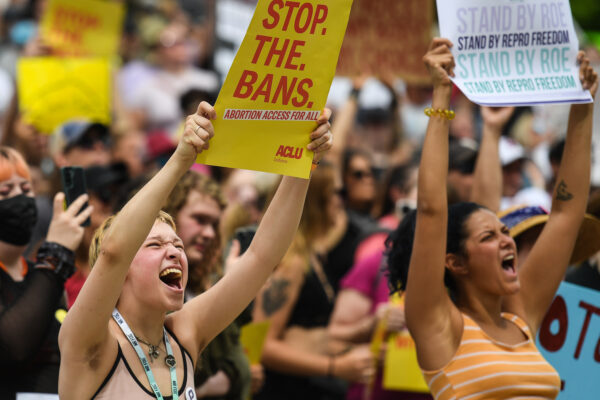
Three years ago today, Indiana’s near-total abortion ban took effect, cutting off abortion access for most Hoosiers and leaving patients and providers to navigate some of the most restrictive laws in the country. Since then, Hoosiers have been forced to travel hundreds of miles for care, doctors have made urgent medical decisions under the threat of criminal penalty, and patients facing serious pregnancy complications have been caught between the law and the care they and their doctors determine they need.
The attacks haven’t stopped at abortion. Indiana is still fighting to keep Medicaid patients from receiving basic preventive care at Planned Parenthood health centers, even as those health centers remain barred from providing abortions in Indiana.
State officials keep searching for new ways to restrict medication abortion that is already out-of-reach for most Hoosiers. This session’s failed Senate Bill 236 would have created a bounty-style enforcement scheme targeting that care and anyone accused of providing it. In June, Attorney General Todd Rokita led the charge along with 13 other states in a failed attempt to get the U.S. Environmental Protection Agency (EPA) to restrict mifepristone, citing unsupported claims that it threatens the water supply.
Earlier this year, a trial court permanently blocked Indiana from enforcing the abortion ban against Hoosiers whose sincerely held religious beliefs require abortion care in circumstances prohibited by the law. The ruling recognized that the ban can force people to violate their own faith. The state appealed, and the Indiana Supreme Court will hear oral arguments in that case on September 10.
That fight is unfolding alongside escalating threats to abortion access nationwide. In May, the U.S. Supreme Court preserved access to mifepristone through the mail and pharmacies while litigation continues, but opponents are also once again urging the federal government to revive a 150-year-old law in an effort to block abortion medication, and potentially other supplies used in reproductive health care, from being sent through the mail.
With the recent confirmation of U.S. Attorney General Todd Blanche, federal threats to reproductive rights are more grave than ever, especially as he aims to make ‘the Dobbs decision permanent in every single state.’
—For years, we’ve watched politicians deliberately chip away at our reproductive rights and bodily autonomy.
Our state constitutional challenge to the abortion ban ended in May, but in our separate religious freedom case, we won a permanent injunction protecting Hoosiers whose beliefs conflict with the ban. The state appealed that ruling, and on September 10, we’ll be at the Indiana Supreme Court defending it.
The state has already taken too much power away from people making extremely personal decisions about their lives. We’re going to keep fighting to get that power back where it belongs: with Hoosiers.
Danielle Drake, Advocacy Manager at ACLU of Indiana
—Abortion bans impact every facet of care, not just abortion. We are three years into this medically unnecessary law and continue to see the way it creeps into the lives of Hoosiers: the pregnant person who doesn’t know where to turn, the provider whose hands are tied by politics, the delayed miscarriage care, the fear associated with what should be one of the most personal decisions a person ever makes – because being pregnant in Indiana is more dangerous than ever.
What the people targeting abortion providers and patients in Indiana don’t understand is that Hoosiers don’t scare easily. We take care of each other. Public support for abortion access is bigger than any ban, stronger than any court ruling, and we aren’t going anywhere.
Rebecca Gibron, CEO and President of Planned Parenthood Great Northwest, Hawai‘i, Alaska, Indiana, Kentucky (PPGNHAIK)
Three years after Indiana’s abortion ban took effect, Hoosiers are still facing the consequences of politicians stripping their ability to make personal decisions about their bodies, health, and futures. The Indiana Reproductive Health and Access Coalition (IRHAC) and its member organizations are still fighting. Together, we will keep organizing, litigating, educating, and advocating to restore and expand reproductive health care access and autonomy Hoosier families want and deserve.
About the IRHAC
The Indiana Reproductive Health and Access Coalition (IRHAC) is a statewide coalition of community organizers, advocates, health care providers, non-profit organizations, legal experts, and storytellers united to defend reproductive freedom and promote equitable access to health care for all Hoosiers.
Learn More
Planned Parenthood Alliance Advocates – Indiana (PPAA-IN) | Women4Change Indiana | ACLU of Indiana | The Good Trouble Coalition | Hoosier Jews for Choice | MADVoters |Indiana Reproductive Freedom PAC | League of Women Voters of Indiana | Indiana Task Force | Coburn Place | Indiana AWHONN | Indiana ACOG | All Options