
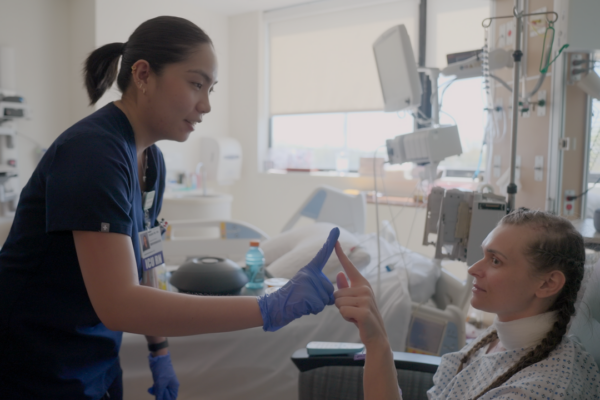
The ACLU of Indiana is proud to partner with the 35th Annual Heartland Film Festival for the screening of A Long Way to Go.
The film explores the experiences of three nurses from the Philippines, Ghana, and India who left their home countries and are now working in the United States. The film is a testament to the passion these nurses bring to their craft and offers a very human look at the complexities of immigration, during a time when such humanity is sorely needed.
Watch the trailer below:
The ACLU of Indiana had the opportunity to speak with the film's director, Carolyn Jones, and producer, Lisa Frank, about their experience creating this project.
Here's what they had to say:
Just to start, can you tell me a bit about the inspiration for this film? Why did you decide to focus on nurses in particular?
Carolyn: My passion for looking at issues through the lens of nurses began years ago with the book The American Nurse. What became clear as I got closer to uncovering the DNA of a nurse was that they are uniquely qualified to understand us as human beings—not just physically, but emotionally and spiritually as well. I have been fascinated by their ability to witness without judgment and care for others without prejudice.
Nurses have long been underrepresented and underappreciated. With an aging society and a shortage of nurses, we need them now more than ever.
The United States benefits greatly from the nurses who come to our country, and we hope to remind the audience of the role they play.
Lisa: There aren’t that many things that we can say are universally true, but I think one true statement is that we will all–one day or another–need a nurse. And that’s true whether you live here in Indianapolis, or if you live in Ghana or India or the Philippines. But the fact is, we don’t have enough nurses in any of these countries. Carolyn and I have been telling stories about nurses for 16 years (beginning with the American Nurse book she mentioned) and we continuously hear about the nursing shortage, at home and abroad.
This film is a love letter to the internationally-educated nurses who are the backbone of our global healthcare system, and to the extraordinary journey they take to care for all of us.
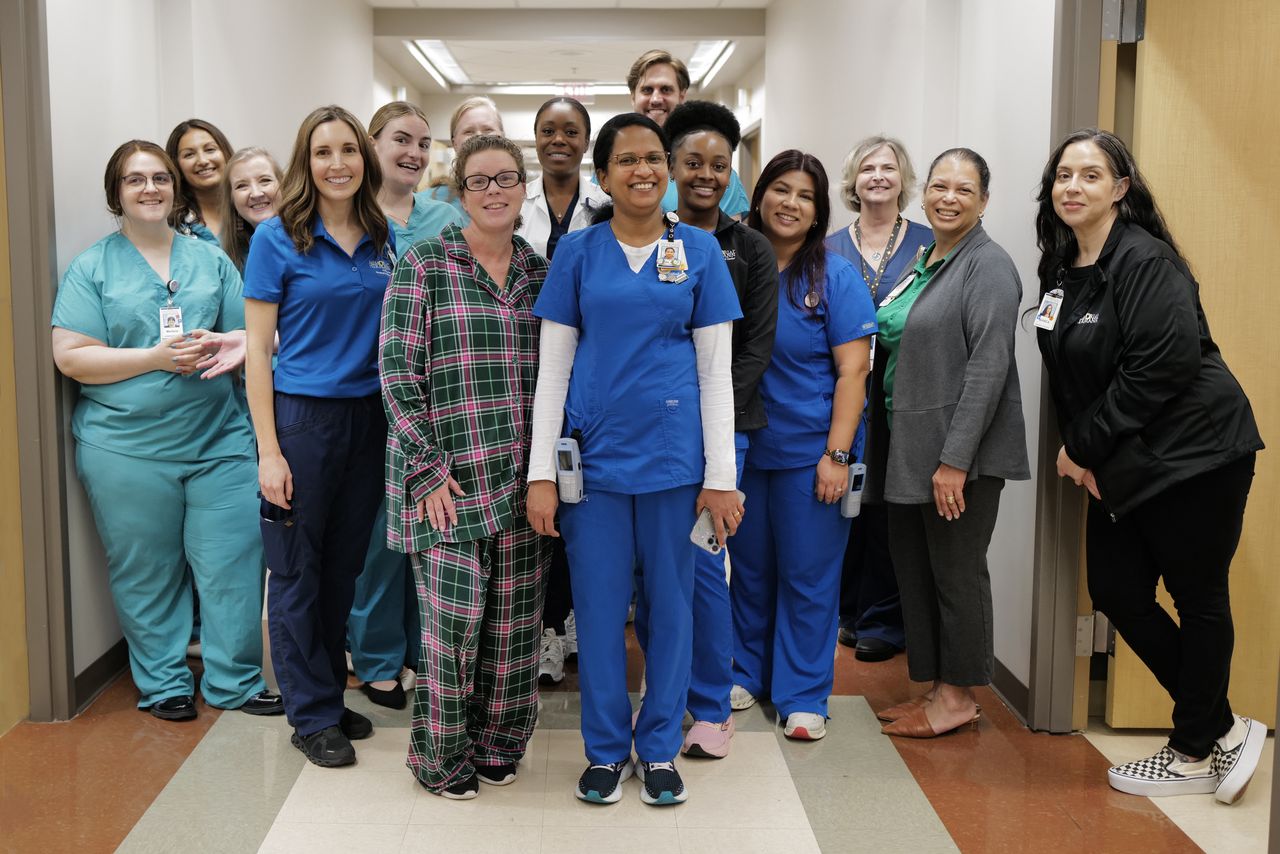
Sini with Colleagues at Memorial Hermann.
Carolyn Jones Productions
And how did you decide on the three main characters we follow: Gifty, Isabel and Sini? How did you find them?
Lisa: Since this is a global story, we were searching for very diverse perspectives that would reflect the history and shifting landscape of nurse migration. The Philippines has a long history of educating nurses who have then moved abroad to work. India used to send a lot of nurses to the U.S., but currently there is a 10-year (or more) waiting period for Indian nurses to get Visas. And Ghana is a country that represents the future of this process because they are now educating more nurses than their healthcare system can find jobs for.
So, we started with target regions and countries, and then we met with a lot of nursing and healthcare leaders, folks from non-profits focused on supporting these nurses and others, and sought out recommendations.
Carolyn: As Lisa said, we wanted to represent three different parts of the world and nurses coming from three different sets of circumstances. We had Zoom interviews with several nurses in the Philippines who were at different stages of trying to come to the U.S., and Isabel was among those nurses.
Gifty was introduced to us as a shining example of a “Global Nurse.” Gifty is well known in the world of nursing, and we were lucky to have a chance to connect with her.
We wanted to explore what it’s like for nurses to have one foot in their home country and one foot here.
I was speaking at a conference in Texas and telling people about this film and how we were knee-deep in production. I mentioned that I was looking for a nurse from India and an entire table of nurse leaders said, “You have to meet Sini.” We had a Zoom with her, and I was enchanted from the beginning. I love her perspective and her attitude.
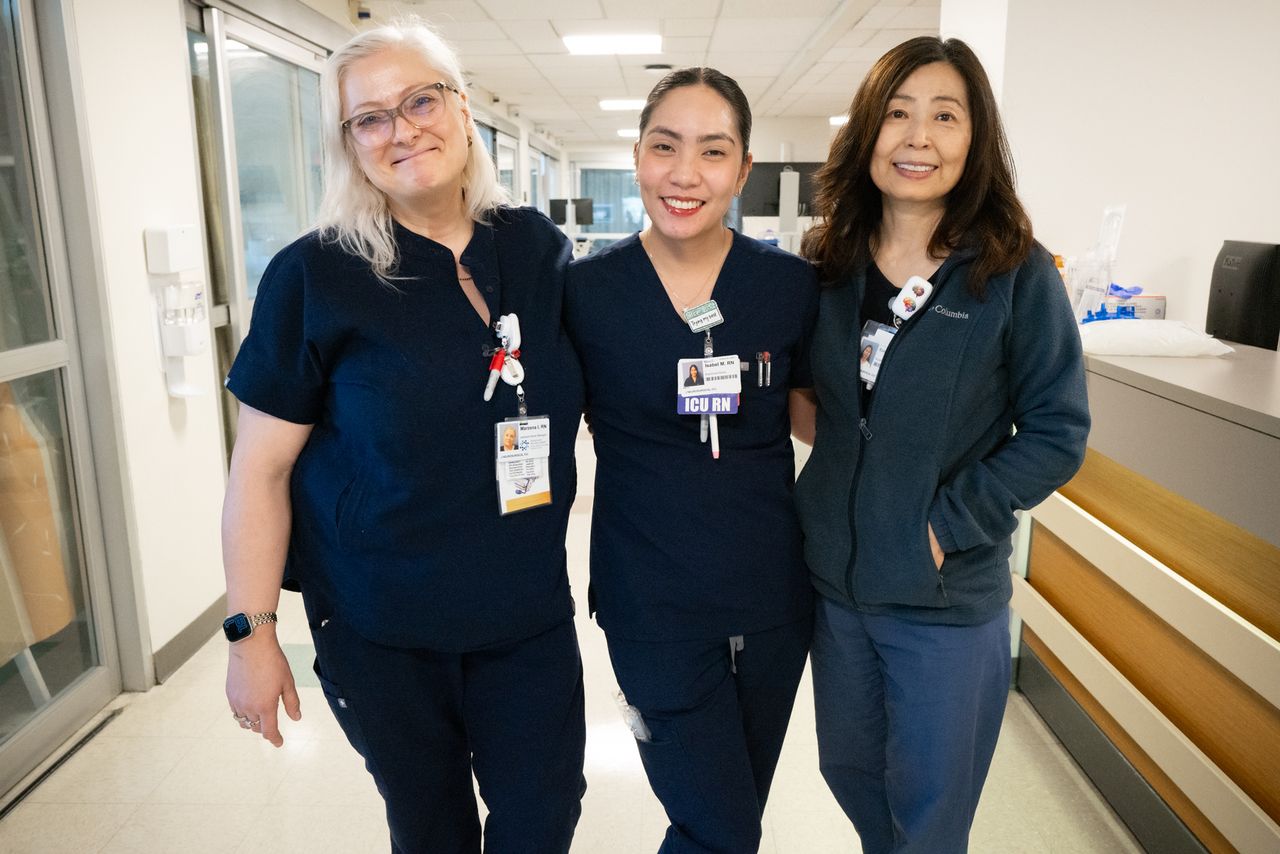
Isabel with her preceptor and boss in New Jersey.
Carolyn Jones Productions
One thing I am realizing is there definitely seems to be an emphasis on the community these individuals are coming from. I was particularly struck by a moment with Isabel, when she hangs up the phone with her family her first night in the hotel. It was a fairly stark contrast from that warmth and joy to a cold and lonely hotel environment. Were you intending to convey that sort of isolation she may be feeling coming to a new place, particularly a place like America, so defined by individualism?
Carolyn: Yes, that contrast hit me hard! We had witnessed the warmth with her family, tasted her father’s cooking, knew how close she was to her parents, and yet here she was alone in a hotel room with her phone as the only connection. My intent was really to show what it means to make a choice like this, how much she was giving up to come here.
Lisa: We were struck by that contrast so many times during this project. There is an emphasis on family and community that was the foundation of everything for Isabel, Sini and Gifty. And of course there are many families and communities here in the U.S. that are equally as warm and welcoming, but we also know that we have persistent chronic loneliness that affects so many of us. In that moment with Isabel, we also got the chance to show how technology is making this journey easier for her than it might have been for someone like Sini, when she first arrived here 20 years ago. Isabel is able to stay connected with her family, even though she won’t see them for the next three years.
What was the hardest part in the creation of this film?
Carolyn: For me the hardest part of the creation of a film is convincing people that it’s worth making and supporting. The fundraising aspect of documentary filmmaking is such a journey and, at a time when grants are in short supply, it was particularly difficult to find the support we needed. We have wonderful sponsors and supporters and we quite simply could not have made this film without them. The travel, the filming, meeting people, capturing the footage and doing the interviews is where the joy and creativity of the project comes through. It is a privilege to get to make a film like this, so although the fundraising is a bit of a slog, the chance to tell the stories more than makes up for it.
Lisa: Agreed, and also, waiting for this moment to finally get to show it to people and see what conversations it might spark!
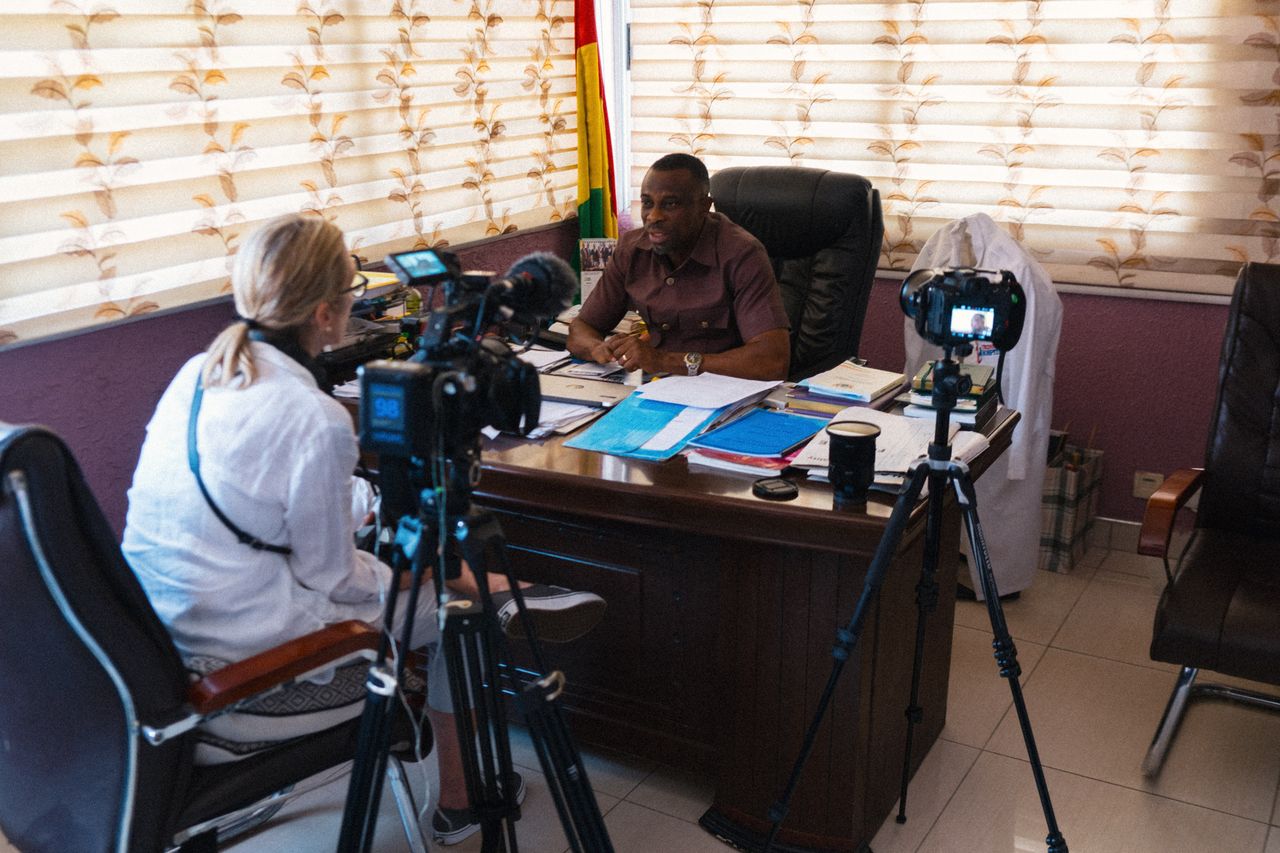
Carolyn interviewing Dr. Emmanuel Obeng, CEO of Trinity Hospital.
Carolyn Jones Productions
As I watched one of the nurses enter her new home, I was struck with empathy at how intense this journey must be. It's resonating with me particularly hard right now as I also am currently going through the process of moving for work. I am only moving one state away, and I have a support network here, but it's still been particularly stressful and difficult. I can only imagine what's going through her head, the bravery and commitment it takes to leave for a new country where you have no connections there at all. What do you hope people feel when they see this and how intensive and scary this process can be?
Carolyn: I understand completely! It doesn’t matter if it’s a state or even a town away from what you know and love – moving is challenging. Watching the way Isabel tackled her first few days in this country impressed me more than I can tell you. The film only captured part of all that she had to do to get settled and be able to function. We followed her as she went to get a rental car and tackle driving on the highway for the first time. There were so many things that she bravely faced.
I know she felt nervous and a bit scared, but she was excited. I kept being reminded that this all felt like a fantastic opportunity for her, a chance to be the breadwinner for her family, treat patients without having to ask them if they could pay for their medications, and start a new life.
I think I often take the opportunities the United States has to offer for granted, so seeing someone appreciate that so fully was eye-opening.
Lisa: We hoped people would feel exactly what you’re feeling: empathy. Isabel sits on the bed and says this is what she had been hoping for, but we can see in her expression that there’s something unspoken that she’s feeling. When you’re a patient in a hospital, you might have a nurse who speaks with a different accent, and you might not think much about them or where they came from. But our hope is that this film will allow people to reflect on the caregivers and essential workers who intersect with our lives every day.
It was interesting that you chose to focus on three nurses at very different phases in their journey to the U.S. One came as a child, another some years ago as an adult, and another is just arriving. Did you set out to capture these unique perspectives, and how do their differences improve the film?
Lisa: It was important for us to capture one story of a nurse going through the immigration process in real time, so that we could really feel the nerves, anticipation and excitement. Isabel is experiencing that journey right now. Sini's story helps us understand that there might be a decade or more of struggles before getting to the other side. And Gifty is so focused on improving health care for everyone, and I think part of that focus comes from the fact that she feels a sense of privilege and wants to do everything she can to give back. The three stories together prove that there isn’t one monolithic immigrant experience. There are different paths, different challenges, and different ways of staying connected to your home country.
Carolyn: Yes, it was important to capture stories of nurses who came to America at different stages in their lives. In a perfect world, I would have loved to follow one nurse for 20 years from the very beginning! But this way we felt as though we could explore the differences in their experiences. No matter how long ago each nurse came to the U.S, the ties to home remain powerful and emotional. I think when we meet immigrants, we are often unaware of who and what lifestyle was left behind.
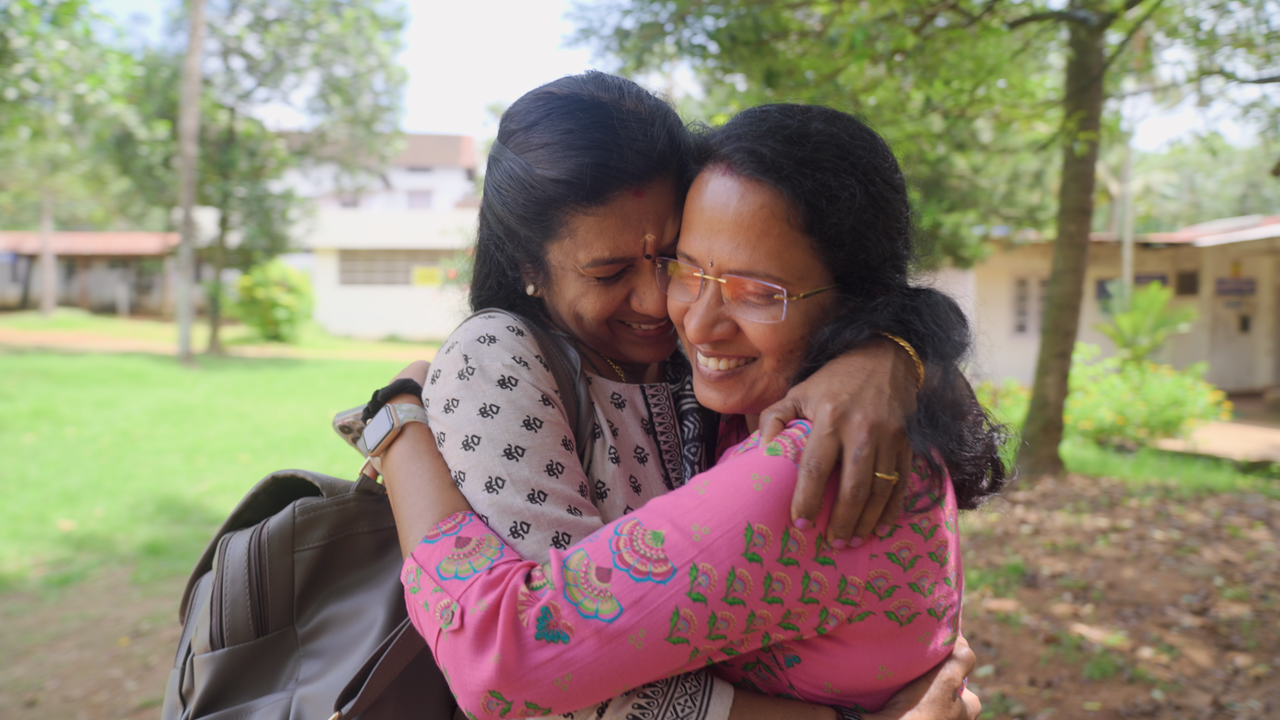
Sini reunites with her former roommate from nursing school.
Carolyn Jones Productions
Something that comes through pretty clearly in this film is the dedication and passion demonstrated by these nurses, doing incredibly complex work in their second (or even third!) language. They are intelligent, driven workers seeking to care for their patients and support their families. Are you hopeful this can help counter the harmful stereotypes often pushed about immigrant workers?
Carolyn: YES! You just hit the nail on the head. First of all, I don’t feel as though the general public understands the depth of knowledge that nurses have. We are so lucky to have nurses to care for us from birth to death.
I’m not at all sure how or why we so readily forget that we are all immigrants here.
The stereotypes are so prevalent right now. My dream is that people will watch the film and truly see the depth and richness of the nurses who have come here to care for others, respect them, and understand the integral role they play in our society. I believe storytelling has the power to change our minds.
Lisa: And I think one of the things that happens when we tell these stories is that the word “immigrant” starts to feel less abstract. We get to know Isabel, Sini and Gifty as individuals. We meet their families and understand their ambitions, sacrifices and the things they bring with them. I hope that by the end of the film, audiences are seeing them first as human beings, and recognizing how much we all have in common.
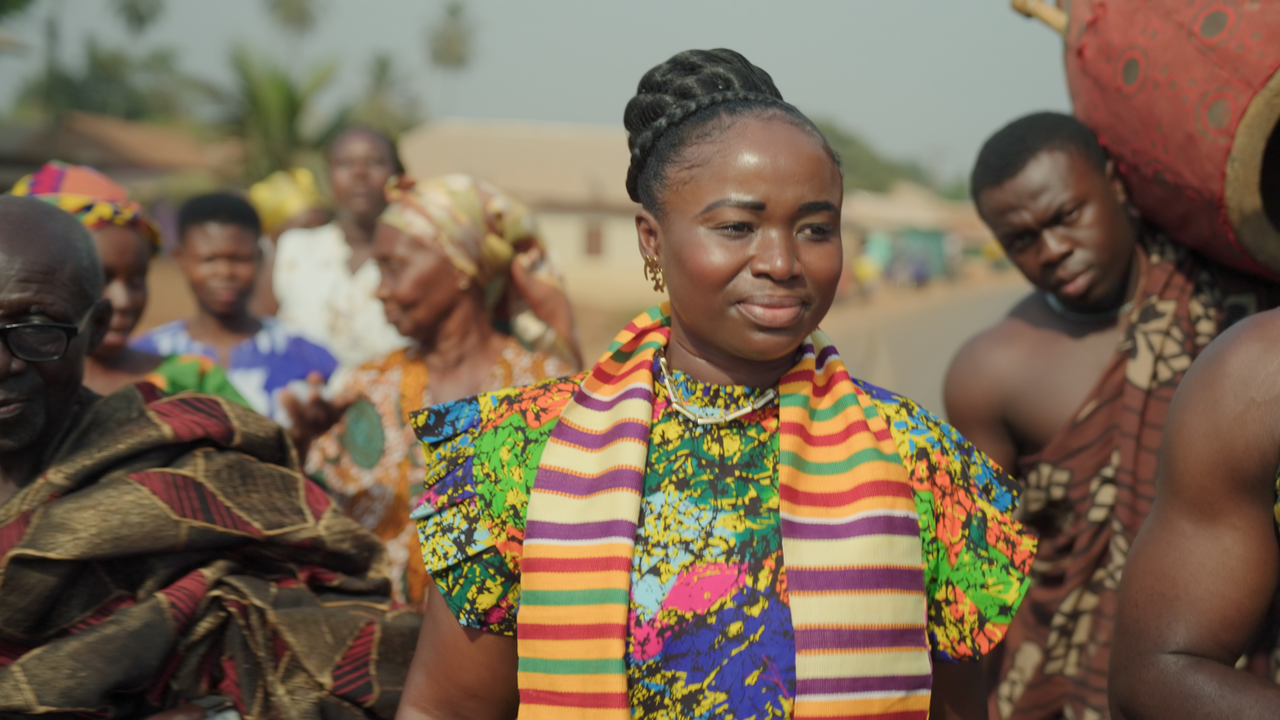
Gifty with members of Mpentuase village walking to future hospital land.
Carolyn Jones Productions
In addition to their work ethic, all three of our main characters carry with them a certain warmth and kindness that makes them incredibly sympathetic. It's almost hard to put it to words. They just exude that energy. Where do you think that comes from? Their backgrounds, all rooted in a deep connection with their community, or their work as nurses? Or is it a bit of both?
Carolyn: With this question, you’ve zeroed in on the main thing that keeps me fascinated by nurses. After spending the last 16 years filming nurses and learning about what makes them tick, I’ve landed on the belief that they are the way they are because of a combination of their DNA AND the work that they do every day. I have a lot to say about this!
Lisa: In all of our projects, we really aim to show the best of humanity. So when we start looking for nominations and recommendations to find the people whose stories we want to tell, we look for those qualities of warmth and generosity. We also look for a sense of humor, which is essential since we all spend so much time together!
What's something you as the creators learned during the creation of this film?
Carolyn: I was struck by how much people in other parts of the world still look toward the U.S. as the land of opportunity. It certainly made me more grateful for what we have here. But also, spending time with these three women and their families really drove home the importance of family and loyalty.
Lisa: Exactly. As much as we constantly complain about our broken healthcare system here in the U.S. — and there’s no question that it is a very broken system — this film made it very clear to me that we are still incredibly lucky to have access to the kind of care that we have.
It’s a very unequal system, but those of us who have health insurance, financial resources, and who live in cities with great hospitals have a tremendous privilege.
Healthcare is a human right, and Gifty says it the best when she talks about wanting people back home in Ghana to have access to the same care she gets in the U.S.
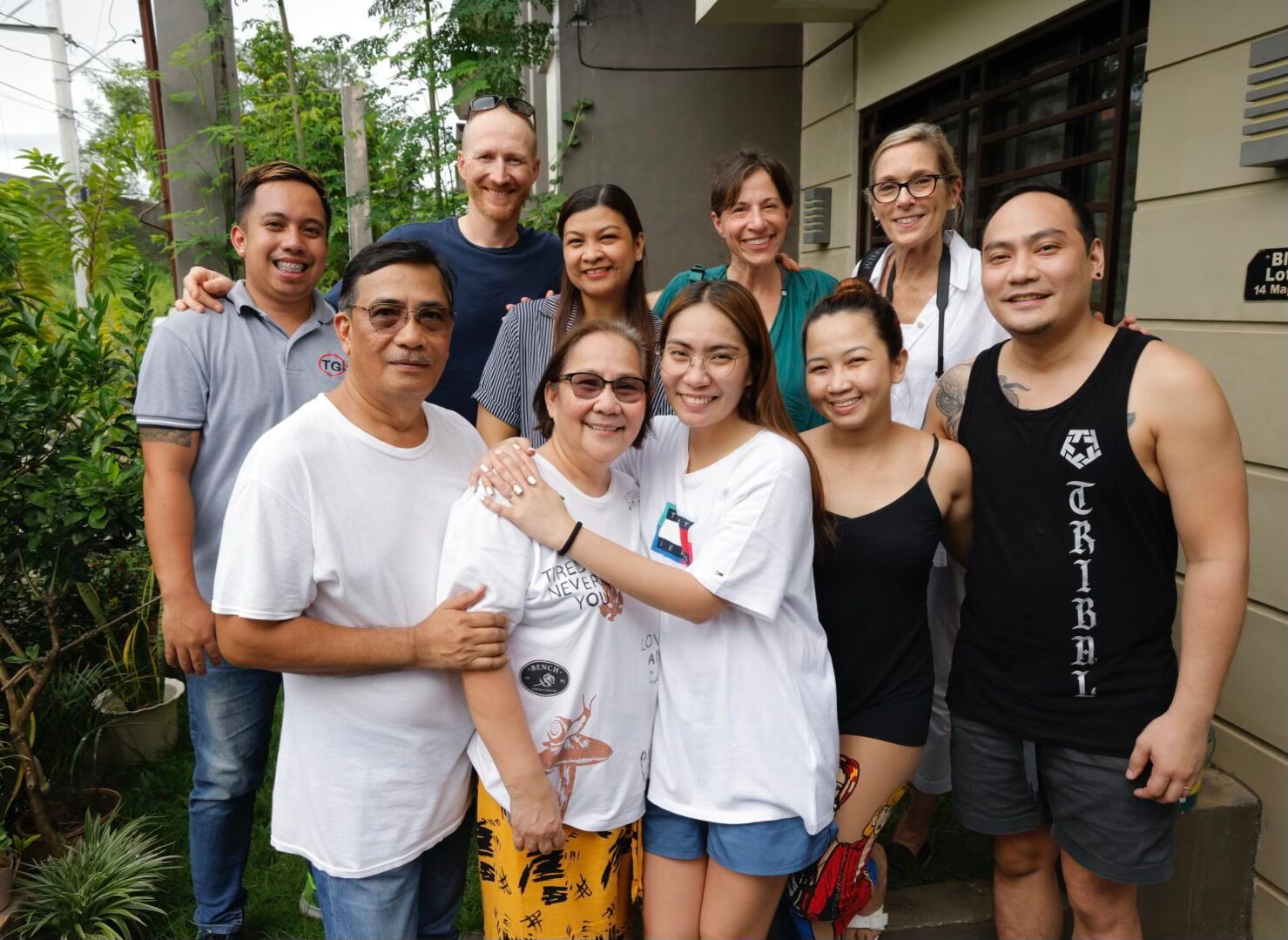
Film crew with local producers and Isabel and her family.
Carolyn Jones Productions
If you had to pick one message from this film viewers walk away with, what would it be?
Carolyn: We have so much in common, most of us want the same things in life. If we can find a way to listen to one another, ask questions and learn from each other, we can make the world a better place. There is so much good happening out there, there are people like Gifty, Sini and Isabel who are changing the world every single day. I hope our film reminds people how much good there is if we look for it.
Lisa: Human beings have been migrating since we were able to move from one place to another. It’s part of who we are. And I hope people will recognize that the nurses and other professionals who come to high-income countries are bringing their talents, their ambitions and their desire to contribute with them. We benefit enormously from what they bring to our communities, and I hope this film makes us embrace that rather than fear it.
In the film, it was addressed that many nurses enter this field as a way to leave their home country, working in the U.S. or elsewhere. That may be a significant benefit to their families they seek to support. But what does that do to their community, when their best and brightest are leaving?
Carolyn: This is such a complicated topic. As Lisa said, people have been migrating since the beginning of time and it’s human nature to want to search for greener pastures and support our families. This migration creates benefits and deficits for sure. We were particularly struck by that in Ghana. There is a moment in the film when Gifty asks a room full of nurses who wants to stay there, and no one raises their hand. As the young woman asks in the film, “if all the nurses are gone, who will take care of our mothers?”
Governments need to find a way to retain their nurses, and countries who are recruiting nurses need to find a way to give back and help educate new nurses who will stay in their countries. We need to help create incentives for nurses to stay, while also providing opportunities for them to grow.
This is why we love Gifty’s story so much – she continues to go back and educate, and of course she is building a hospital, which will have an enormous impact on her Ghanaian community.
Lisa: When you hear these individual stories, it makes total sense why a family would encourage their loved one to emigrate, because it can make a dramatic difference for that family. But, as you implied in your question, there is a cost to that migration. Remittances can be incredibly important to families and to a country’s GDP, but economists generally agree that they don’t make up for the loss of knowledge, innovation and experience of the skilled professionals who leave.
I think that’s the real challenge, which Carolyn outlined: how do we create opportunities for people to pursue their ambitions and support their families, while also making sure the communities they come from have the healthcare professionals they need?
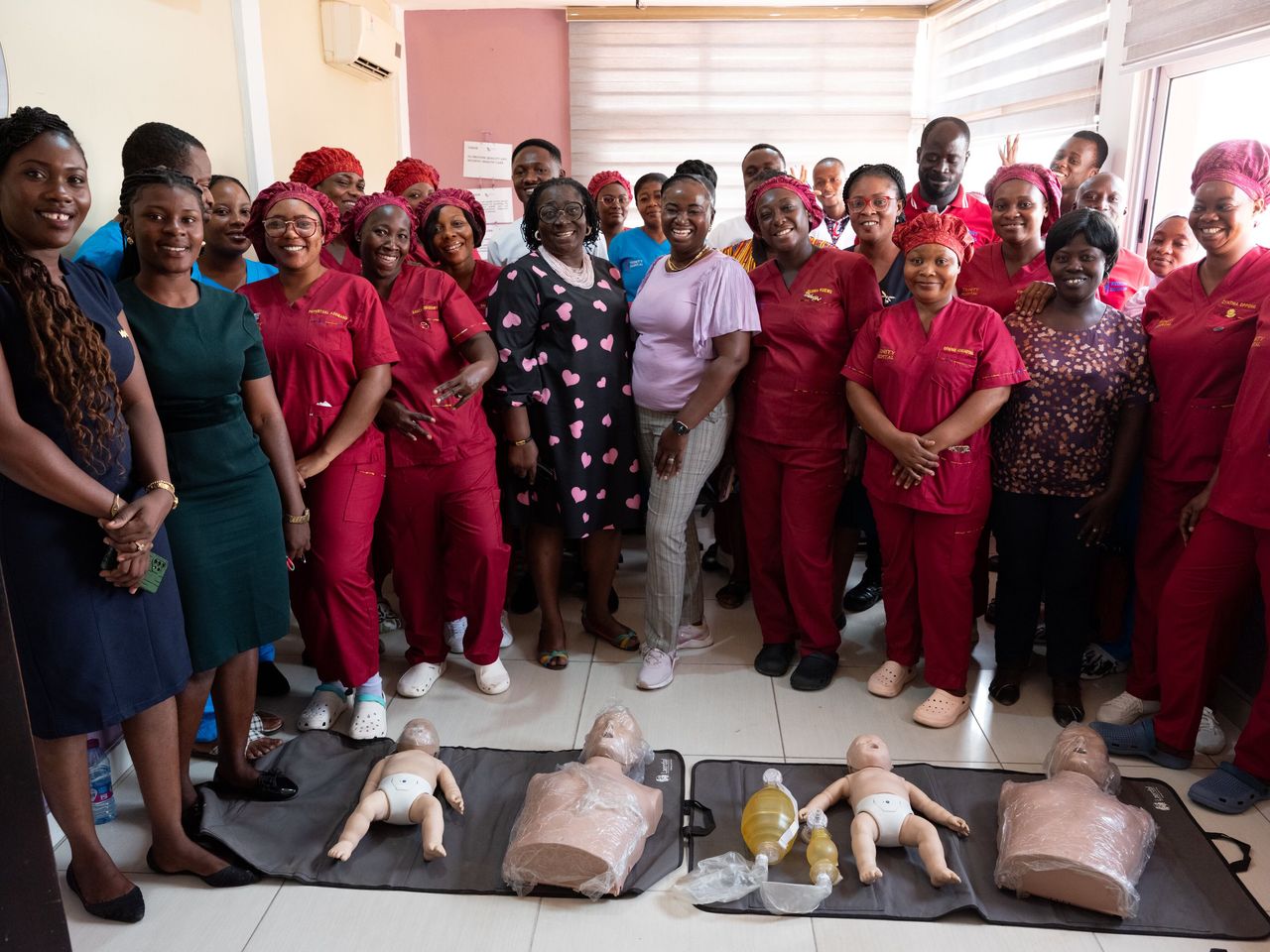
Gifty with the nurses after conducting CPR training in Ghana.
Carolyn Jones Productions
I'm fascinated by a quote I heard early in the film, "Good health isn't made on the basis of where lines on a map are drawn." I think it's especially interesting contrasted to a line near the end of the film, "We have a long way to go for global health." In your mind, what's missing from the conversation on global health? What do we need to do to address the problems? It's a long way to go, yes, but how do we get there?
Carolyn: We were incredibly lucky to have a chance to meet and interview Howard Catton, who is the head of ICN (International Council of Nurses). He spends his life trying to answer that question and is incredibly articulate in laying out the issues.
I think there are many people who don’t really think about global health. One of the things happening in our country right now as we get more and more divided and isolated is that we forget how we impact one another. As Howard would say, a disease or a virus doesn’t get stopped at the border. With so much movement in our world, global health is something that must be addressed. The first step is to raise awareness.
Lisa: A big part of the solution has to do with nurses and nurse staffing. There is no healthcare without nurses, because nurses provide the majority of direct, hands-on patient care.
So one thing that is within our power to do is to focus on ethical recruitment—to stop high-income countries from actively recruiting nurses from the places that can least afford to lose them.
This is just one small step, but it would be a step in the right direction. Beyond that, if countries like the U.S. could grow our own pipeline for educating nurses, it would reduce the burden of having to bring more nurses from other countries. As Efua said in the film, it always comes down to financial issues, and governments choosing (and having enough funds) to invest in their own healthcare workers.
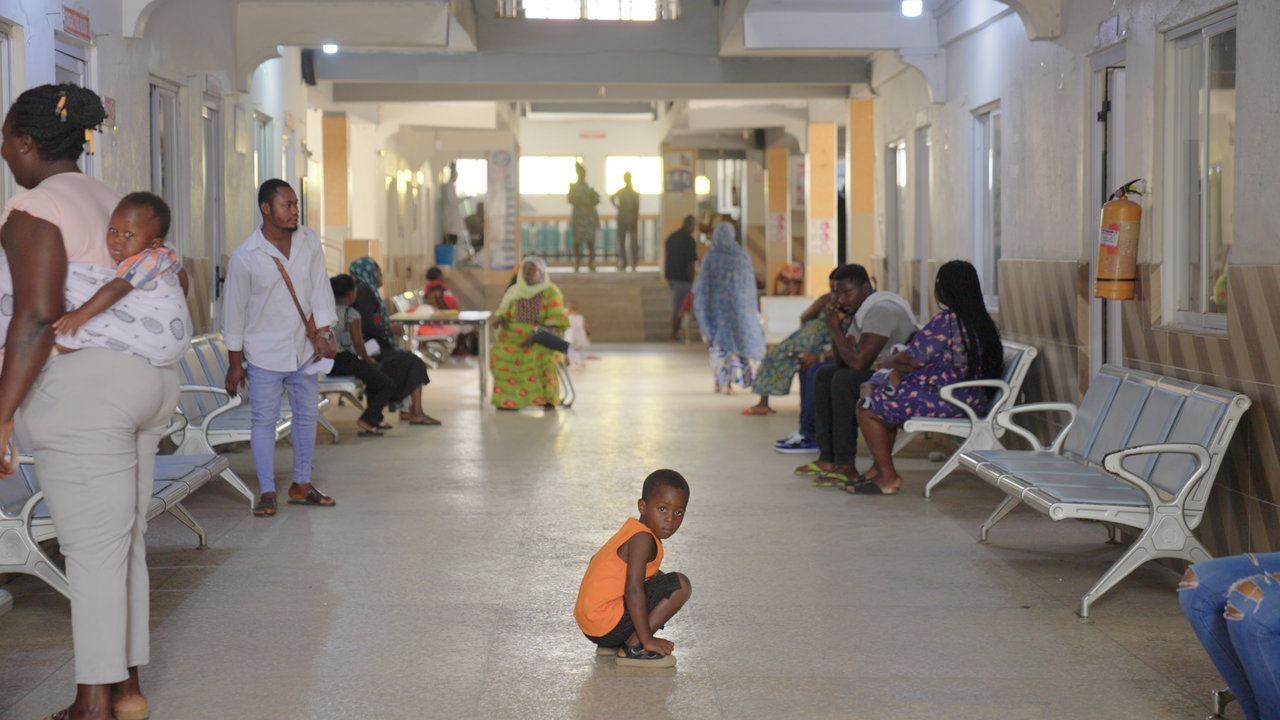
Waiting Room at Afari Hospital.
Carolyn Jones Productions
You visited a lot of countries in the creation of this film. Do you have favorite memories from each?
Carolyn: There is something about Africa that grabs my heart when I am there. I can’t explain it, but I feel connected to the people, the colors of the fabric, the earth, the warmth of it all. We were able to put some “outtakes” at the very end during the credits, and some of my favorite moments are in there: watching Gifty getting her hair braided at a local shop in Ghana, seeing her join in at a local Pentecostal church, watching the celebration with Sini in her hometown and seeing how much joy can come from the simplest things. And talking with Isabel’s mom and feeling what she must have felt, knowing that her daughter was leaving the country. I have countless favorite memories. It was very rich and transformative.
Lisa: The “tody-tapper” in India. The musical “parade” in Mpentuase in Ghana. And sitting in traffic in Manila. (Kidding!) Isabel riding to work in a tricycle. Bonus: the food was incredible everywhere we went!
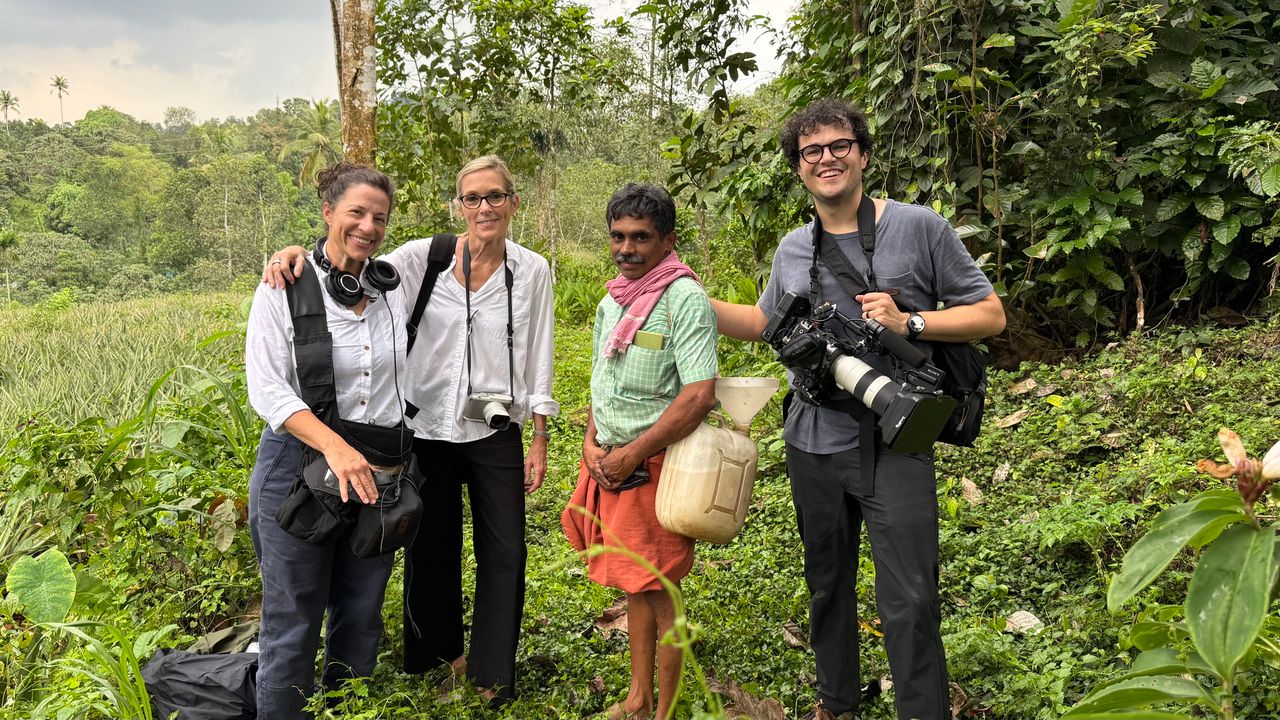
Lisa, Carolyn, and Rob with Tody Tapper in Kerala, India.
Carolyn Jones Productions
What's next for you? Do you intend to work on more films like this?
Carolyn: Diving into the world of nurses has been enormously rewarding and we've learned so much. We’ve learned about the profession of nursing, but this deep dive has provided insight into health, not just of the people we have met on the journey, but the health of the country. As we think about whatever our next project will be, we hope to continue to tell stories that resonate and inspire, stories that shine a light on people whose voices may not otherwise be heard.
More than 100 independent films will be shown at the Heartland Film Festival from Oct. 8 through 18 at the Alamo Drafthouse Cinema, Indy Art Center, Kan-Kan Cinema, Living Room Theaters, Newfields, Scottish Rite Cathedral, and virtually.
A Long Way to Go will have showings on:
- Saturday, Oct 10, 2:45 p.m. @ Alamo Drafthouse Cinema at The Square - Theater 8
- Sunday, Oct 11, 5:30 p.m. @ Living Room Theaters - Theater 3
- Monday, Oct 12, 5:30 p.m. @ Living Room Theaters - Theater 4
You will also have the option to stream the film online from 12 p.m. Oct. 8 through 11:59 p.m. Oct. 18. Use promo code HFF35ACLU for 50% off tickets.