
This week brought us two major updates in the ongoing fight over reproductive freedom: one from the Indiana Supreme Court and another from the U.S. Supreme Court.
With these updates, we can see how much is still at stake for people in Indiana trying to access abortion, miscarriage care, and the ability to make personal, often life-saving health decisions without government interference.
A Dangerous, Narrow Reading Ends Our State Constitutional Challenge
On Thursday, May 14, the Indiana Supreme Court declined to review our state constitutional challenge to the near-total abortion ban, meaning the Court of Appeals’ August 2025 decision stands, and this specific case has concluded. Back in 2023 — after the 2022 law banning most abortion care was passed — the Indiana Supreme Court recognized that Indiana’s Constitution protects the right to an abortion when necessary to protect a pregnant person’s life or from a serious health risk, leaving existing questions about what that means in real medical situations.
As the case continued, medical providers brought evidence about serious pregnancy-related health risks, including preeclampsia, preterm premature rupture of the membranes (PPROM), serious blood clots, severe mental health conditions, and more – all included instances where delaying/denying care can put patients’ lives at risk.
Despite this, the Court of Appeals upheld the law, ruling that the rights under Article 1, Section 1 of the Indiana Constitution applies only when the abortion “is the only reasonable medical option to protect the patient’s life or prevent a serious health risk. This dangerous, narrow reading is now the final word in this case, and Supreme Court justices did not provide an explanation for their decision not to hear the case in their one-page order.
Our Religious Freedom Challenge Moves Forward
In a separate challenge to the statewide abortion ban on the grounds of religious freedom, we won at the trial court. That ruling currently blocks Indiana from enforcing the ban for Hoosiers whose sincerely held religious beliefs require abortion care in circumstances prohibited under the law.
The state has appealed, and the Indiana Supreme Court has agreed to take up the case, bypassing the Court of Appeals. Briefing is set to wrap up this summer, with oral argument scheduled for September 10, 2026.
So, while one case has ended, the fight in Indiana is far from over.
Federal Mifepristone Access is Preserved, for Now
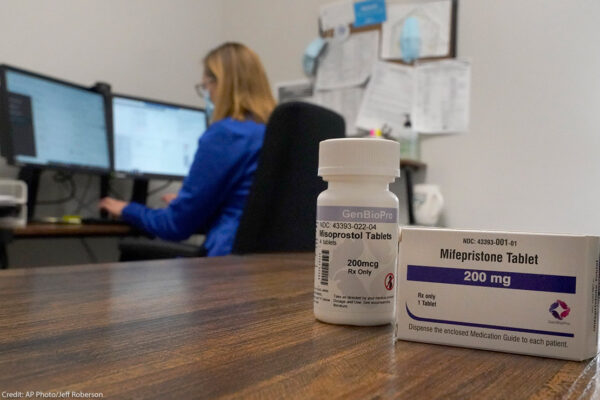
On Thursday, May 14, the U.S. Supreme Court also granted an emergency order to block a lower court decision that would have prohibited access to mifepristone by mail and at pharmacies. That means access stays the same for now while the case continues.
Indiana already has extreme barriers to accessing this kind of medication, and adding more restrictions would have pushed this care even further out of reach.
This order is good news for now, but anti-abortion politicians are still attempting to use the courts to impose life-threatening and unnecessary restrictions on medications like mifepristone nationwide.
What This Means for Hoosiers
Reproductive freedom in Indiana is still widely compromised.
- The state’s abortion ban is still in effect.
- One legal challenge under the Indiana Constitution has ended.
- A separate religious freedom challenge is currently before the Indiana Supreme Court, after we won at the trial court.
- Nationally, access to mifepristone remains unchanged, but is still being challenged.
Courts are still shaping access to immensely personal reproductive autonomy, but we will continue fighting for the right of everyone in Indiana to make their own decisions about their lives, health, and beliefs.