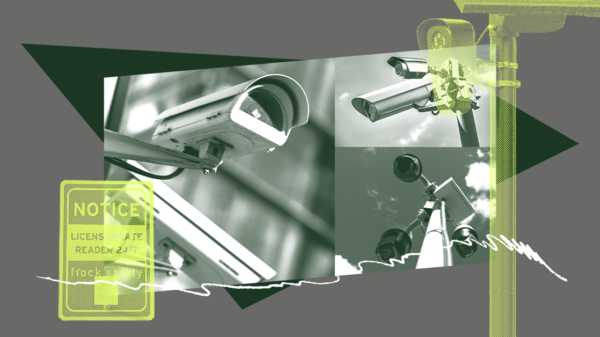
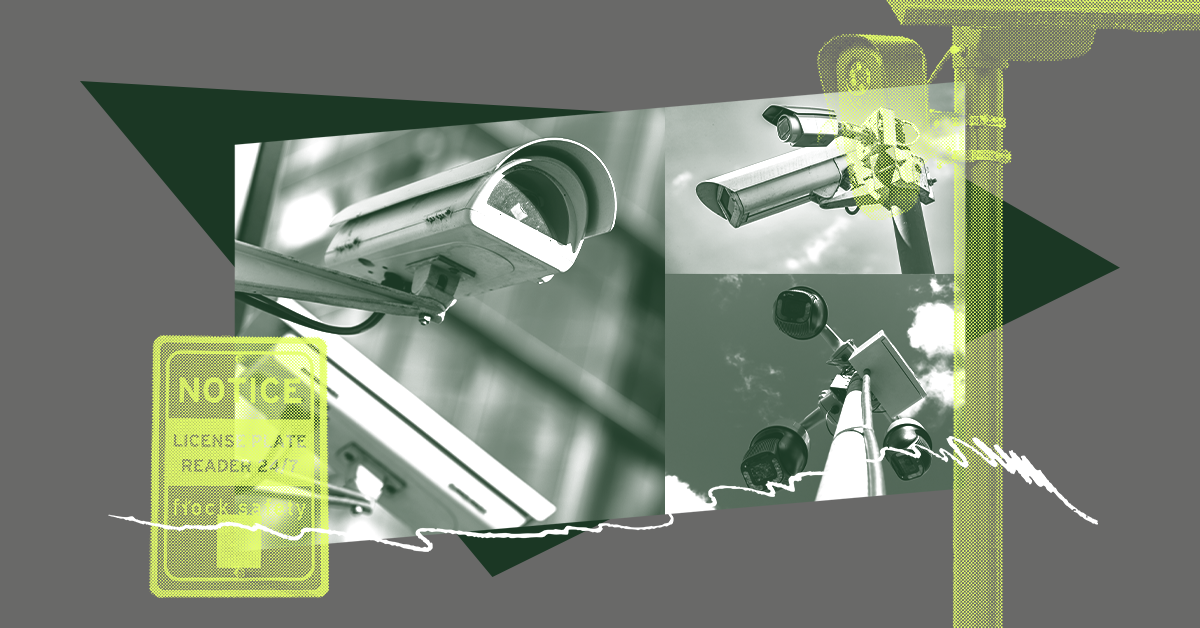
Over the past couple decades, the relentless spread of automated license plate readers (ALPRs) has transformed the act of everyday transportation into a quiet form of mass surveillance.
Flock Safety is by far the largest ALPR provider, with between 80,000 to 100,000 cameras installed across the U.S. (Data For Justice Project, ACLU).
The cameras are sold as simple public safety tools, but Flock says its network produces over 20 billion plate scans each month for more than 5,000 communities (Flock Safety). That data can reveal deeply personal details about someone’s life, including visits to doctors, places of worship, or protests.
There are effectively no federal or statewide laws governing how ALPR data is used, aside from a recent Indiana law barring Homeowners Associations (HOAs) from securing and putting up their own cameras. This absence of regulation is especially dangerous because most ALPR data is shared either regionally or even nationally.
Flock contracts automatically opt communities into nationwide data sharing, meaning a camera installed on one corner in Indiana can become part of a vast searchable network.
This access has already been abused, creating risks for privacy, free speech, due process, immigrants’ rights, and even reproductive freedom. Although Flock does not have an official contract with U.S. Immigration and Customs Enforcement (ICE), users can run searches on behalf of other agencies.
HaveIBeenFlocked.com, which aggregates Flock audit logs obtained through open records requests, found nearly 2,000 Indiana data requests where “immigration” was listed as the reason for use. That data set is only a fraction of total searches likely conducted, since many communities do not publish audit logs or release only redacted records.
In Texas, one sheriff was found using ALPR data to track down a woman who had an abortion (404 Media). In a state like Indiana where virtually all forms of abortion are banned, location data connected to clinics or out-of-state care could put people at risk, especially if law enforcement agencies are pressured to use every tool at their disposal.
Flock and other ALPR providers are private companies, meaning they are not subject to the same transparency measures and checks and balances as a government agency. When surveillance becomes a business model, the pressure to expand data collection and access will likely win out over privacy. That risk grows as Flock adds AI tools that flag “suspicious” driving patterns with little public oversight.
Across the nation, communities are rejecting the model of mass surveillance, with more than 55 localities ending or refusing contracts with Flock in the past year alone. Even here in Indiana, Bloomington declined to renew their Flock contract following an evaluation, and cities like Muncie have developed a municipal Transparency Portal and local regulations for ALPRs.
If Indiana continues to use ALPRs, lawmakers must enact strict statewide limits on when they can be used, how long data can be kept, who can access it, and where it can be shared. At minimum, that should mean narrow use limits, policies limiting data retention, warrant requirements for sensitive searches or outside access, public reporting, and real accountability for violations. Until then, residents can pressure local officials to adopt those protections themselves or cancel their ALPR contracts in the name of civil liberties and privacy.
Learn more about our push for ALPR regulations here.