On Saturday, March 28, Hoosiers across the state will gather for the third mass mobilization of No Kings, a network fighting back through protest against the harmful policies of the Trump administration. Dozens of No Kings events will be held across the state, and this meaningful demonstration is a concrete way people are building community and voicing their opposition to the current policy climate. Showing up this weekend is a starting point, but it’s not the finish line.
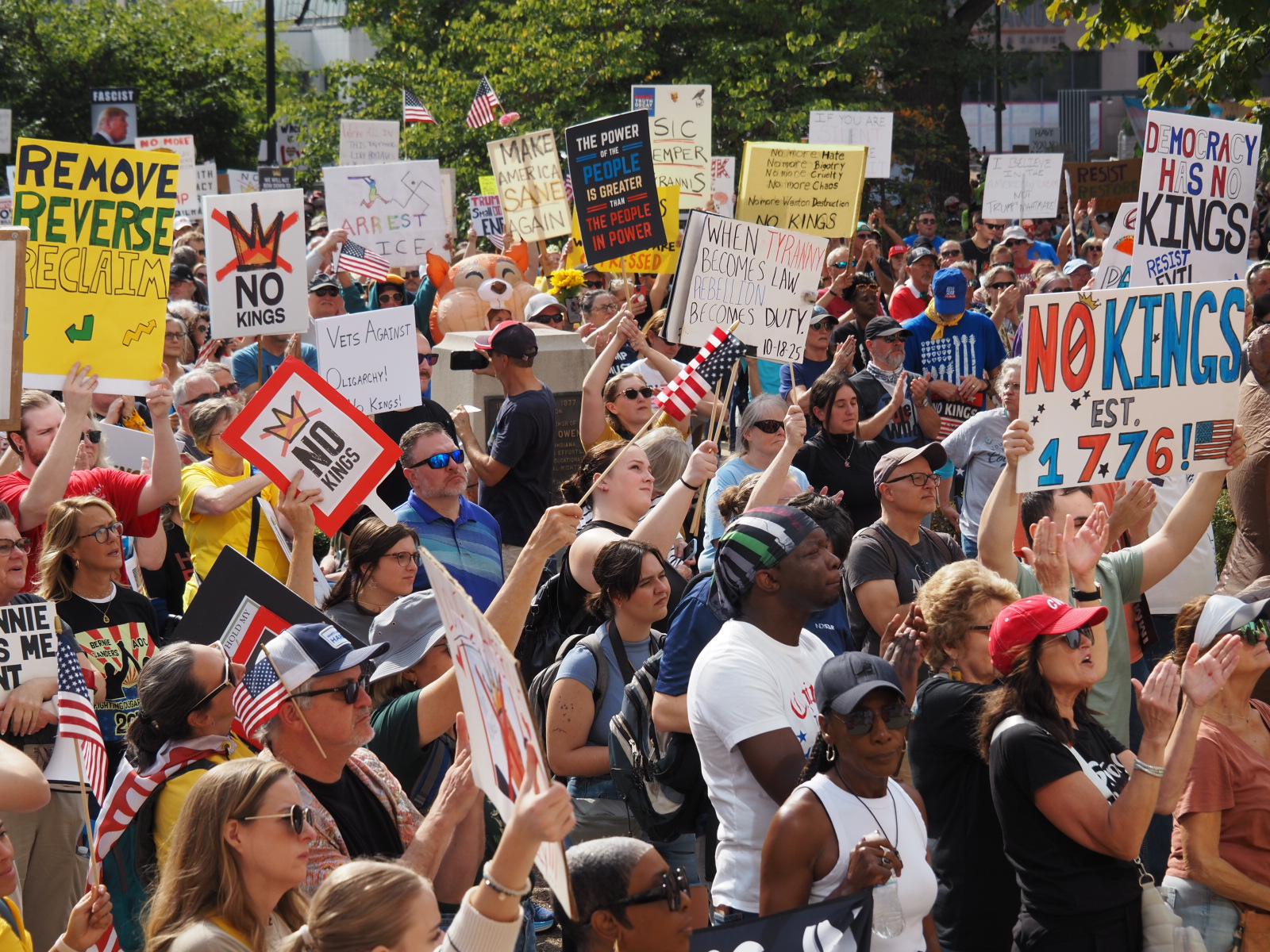
Photo by Leslie Bonilla Muñiz/Indiana Capital Chronicle
Protest Matters, but What Comes Next?
Indiana’s October No Kings rallies totaled more than 40 events statewide; this weekend will almost double that, drawing thousands to courthouses, civic squares, and sidewalks to stand in defiance of Trump policies.
Protest is critical to large-scale societal change; this has been proven repeatedly. Throughout history, from women’s suffrage to civil rights and legalizing same-sex marriage, Americans have rallied to further their civil liberties and fight injustices prevailing in their communities.
Moments like No Kings mobilizations matter because they generate visibility, urgency, and connection on where our nation stands in this moment. But lasting change requires more than a single day of demonstration; it requires Hoosiers to stay engaged after they’ve put away protest signs.
The 2024 election saw 2,976,581 — or 61.5% registered voters — cast a ballot in Indiana, almost 100,000 fewer votes than in 2020. This is a 6% statewide drop compared to 2020, with Indiana already sitting low for turnout compared to other states.
Fast forward less than two years, and our civil liberties are under attack in novel ways; we cannot afford to be disengaged in this moment. The real question is not whether Indiana cares — mobilizations like No Kings show that we do. The question is how we strategically turn that outrage into power, which is by exercising our fundamental right to vote.
Right now, in Washington, the SAVE America Act has passed the House and is being debated in the Senate after a 51-48 vote to take up the legislation. This thinly veiled attempt to disenfranchise voters, all while attempting to shoehorn in anti-trans policy, showcases how critical it is to take our civic engagement seriously in this upcoming election. Although it seems the bill is blocked by failing to reach the 60-vote threshold needed to pass, its movement through Congress is significant.
Even here in Indiana, SEA 10 from the 2025 legislative session removes college students’ ability to use a university ID at the polls, targeting a primary voting method used by thousands of young Hoosiers for the last two decades. This pattern shows how legislators both locally and federally have used conspiracy to draft and pass legislation disenfranchising voters.
That is why this moment must lead somewhere. Demonstrations can make public opposition visible, but they do not replace the work of paying attention, tracking legislative records, and voting. If the goal is accountability, then protest must be paired with civic participation.
Know the Score: How Lawmakers Voted
The 2026 legislative session in Indiana was truly unprecedented, from a national push to redraw congressional maps mid-decade, which Indiana defeated despite a Republican supermajority, to abridged timelines and last-minute hearings on bills concerning the death penalty, abortion rights, and free speech, it was not always easy to track what was happening in real time. This is why voting records offer a clear measure of accountability for constituents to assess how their elected officials are representing them.
Our Legislative Report and Scorecard highlights six bills with major civil liberties implications and gives voters a clearer view of how lawmakers voted on some of the session’s most consequential measures. It is one resource among many to cut through campaign noise and understand where senators and representatives really stand, which is invaluable as we approach the election.
Make a Plan to Vote
Indiana’s Primary Election is rapidly approaching, with the deadline to register on Monday, April 6, and early voting opening the following day. On the heels of Saturday’s No Kings mass mobilization, take the next step and check or start your voter registration, find your polling place, and prepare to cast your ballot. Save the following deadlines:
- Monday, April 6, 2026: Voter registration for the Primary closes.
- Tuesday, April 7, 2026: Early voting begins for the Primary.
- Tuesday, May 5, 2026: Primary Election Day
- Tuesday, May 19, 2026: Voter registration reopens for the General Election.
- Monday, October 5, 2026: Voter registration closes for the General Election.
- Tuesday, October 6, 2026: Early voting begins for the General Election.
- Tuesday, November 3, 2026: General Election Day
Learn more about the upcoming No Kings mobilization here and get ready for the 2026 election here.