
Criminal Legal Reform

The ACLU of Indiana fights to protect the rights of individuals at every level of the criminal justice system.

Criminal Law Reform

America, land of the free, has earned the disturbing distinction of being the world’s leading jailer. Representing just 5 percent of the world’s population, we now hold 25 percent of its inmates. The “tough on crime” politics of the 1980s and 1990s fueled an explosion in incarceration rates. By the close of 2010, America had 1,267,000 people behind bars in state prisons, 744,500 in local jails, and 216,900 in federal facilities — more than 2.2 million people locked in cages.

In Indiana, 43,200 Hoosiers are in state prison or jail and 116,700 people are on probation or parole. 34% of Indiana’s incarcerated population is Black, as compared to 9% of the state population.

The ACLU of Indiana supports criminal justice reform and fights for the rights of those who are incarcerated in our state. This includes working to reduce jail overcrowding and working to protect religious liberty. We have opposed legislation dictating DNA collection of arrestees in the statehouse, and we have worked with local law enforcement on developing stronger implicit bias training.

  • Reforming Policies: We are fighting for nationwide reforms to police practices, indigent defense systems, and government abuses of authority in the name of fighting crime.
  • Sentencing Reform: We must reduce both the number of people entering jails and prisons and the extreme laws and policies that drive extraordinarily long prison terms.
  • Bail Reform: Unjust and for-profit bail systems needlessly lock up millions of people who haven’t been convicted of a crime just because they can’t afford to pay bail. We’re overhauling this harmful system that strips people of their rights, targets poor people and people of color, and hurts families and communities.
  • Prosecutorial Reform: Prosecutors across the country work towards convictions, not justice. These mostly elected officials bear great responsibility for driving mass incarceration. We’re changing that by challenging prosecutorial abuse in the courts and legislatures and through voter education.
  • Parole Reform: Hundreds of thousands of people—including those convicted of violent and non-violent crimes—stay in prison for too long because of broken parole and release systems. By expanding evidence-based opportunities for release, we are working to ensure systems are fair, respect people’s rights, and promote safety and success for those returning to their communities.
  • Reentry: Each year, 600,000 men and women nationwide return from prison to their communities. Yet the challenges do not end once the prison bars are lifted. They face nearly 50,000 federal, state and local legal restrictions that make it difficult to reintegrate back into society. We are working to end the collateral consequences that are imposed on people living with a criminal record.
  • Voting: Voting rights are restored upon release from jail or prison in Indiana. People who have been previously incarcerated should check their registration, and re-register to vote if it has been canceled. Individuals on parole, probation, home detention, or people who are in jail, awaiting trial can vote. People who are in a community corrections program can vote. Read more on Yes! You Can Vote!

The Latest

Press Release
Placeholder image

Life-Threatening Failures in Medical and Mental Health Care at Miami Correctional Facility Require Emergency Court Intervention for Detained Immigrants

People held by ICE at Indiana’s largest detention facility face dangerous delays in treatment, denied medications and worsening health conditions
Court Cases: Vasenin v. Mullin
Press Release
Placeholder image

ACLU of Indiana Responds to the Passage of Public Question 1
Following the Midterm election, Indiana’s Constitution now allows broader denial of bail. What does this mean for Hoosiers?
Issue Areas: Criminal Legal Reform
Press Release
Placeholder image

Public Question 1 Puts Indiana’s Constitutional Right to Bail Before Voters

The proposed amendment would give judges broader authority to keep people behind bars while they await trial, even though they’re presumed innocent.
News & Commentary
14th Amendment

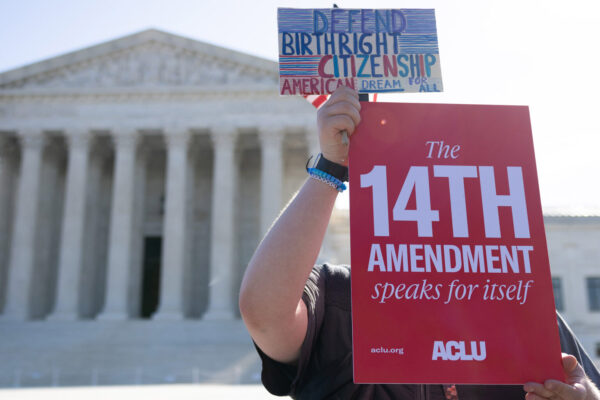
The Latest from SCOTUS: What It Means for Hoosiers

A roundup of major decisions affecting citizenship, voting rights, immigration, and transgender rights

Cases, Campaigns & Legislation


Court Case
Nov 19, 2026

Vasenin v. Mullin

As part of its cruel, senseless mass deportation program, Immigration and Customs Enforcement (ICE) contracted with the State of Indiana in 2025 to house immigrants at a state penitentiary called Miami Correctional Facility in Bunker Hill, Indiana. . We represent three immigrants on behalf of a proposed class of other immigrants detained there by ICE The Department of Homeland Security glibly named Miami Correctional the “Speedway Slammer,” and it is now one of the largest and deadliest immigration detention centers in the Midwest. Miami Correctional has long been problematic, with portions of the facility (now being used for immigration detention) being closed because of their dangerous conditions. An Indiana Department of Corrections official acknowledged as much, testifying that “we’ve struggled with the ability to keep those incarcerated [at Miami Correctional] safe.” The immigrants held at Miami Correctional are being denied adequate medical care, live under constant threat of prolonged solitary confinement without justification, are subjected to racist and xenophobic abuse, and are forced to endure filthy conditions and inadequate access to food, water, clothing, essential medications, and hygiene items. They are housed in two-person cells measuring just five by eleven feet, each containing a metal sink and toilet. One of the lead plaintiffs has been treated for epilepsy for years but is being denied proper medication, and another lead plaintiff was denied mental health care for weeks. These accounts echo other stories involving medical neglect at Miami Correctional and a report exposing widespread failures in medical care at the facility. The conditions being experienced by immigrants detained at Miami Correctional include: Inadequate health care – including dangerous understaffing, inadequate health screenings, delays and denials of urgently needed medications and treatment, and ineffective emergency response. The use of abusive punishment – including forcing people into solitary confinement for 23 and 24 hours each day, with little or no justification, use of force by staff without accountability and consequences, and untrained staff who degrade immigrants being held at the facility with racial and xenophobic slurs, including calling them a “plague.” Inhumane conditions – including inadequate and unhealthy food, lack of access to water, inadequate clothing and shoes (especially during winter), inability to access hygiene items and little or no access to recreation. The conditions are described as “filthy” in most parts of the facility. We are asking the court to order federal and state government officials to stop their mistreatment, provide of the immigrants detained with constitutionally adequate care, and to take immediate steps to protect the people detained by ICE at Miami Correctional. We are joined in this litigation by lawyers from the ACLU of Illinois, MacArthur Justice Center, the National Immigrant Justice Center, and the Dunn Issaacson Rhee law firm.
Campaign
Nov 2026

Welcome to the Era of Presumed Guilt: Public Question 1

This November, Hoosier voters approved Public Question 1, amending Indiana’s Constitution to expand when the government can jail someone before trial. Taking away someone’s liberty before conviction is one of the most serious powers we give the government. This amendment broadens that power based not only on what someone is accused of, but on who a court believes they may be.
Legislation
Jan 21, 2026

Criminalizing Homelessness (SB 285)

These bills would make it a crime to camp, sleep, or shelter on public property. They specify that law enforcement officers give anyone who violates this law a warning. If the person does not move in a specified timeframe, they can be charged with a Class C misdemeanor (48 hours in the case of SB 285, 24 hours in HB 1431).
Status: Passed Both Chambers
Position: Oppose
Legislation
Jan 2, 2026

Constitutional Amendment Restricting Access to Bail (SEJR 1)

SEJR 1 has passed out of the Indiana General Assembly once again and will be headed to voters’ ballots in November.
Status: Passed Both Chambers
Position: Oppose