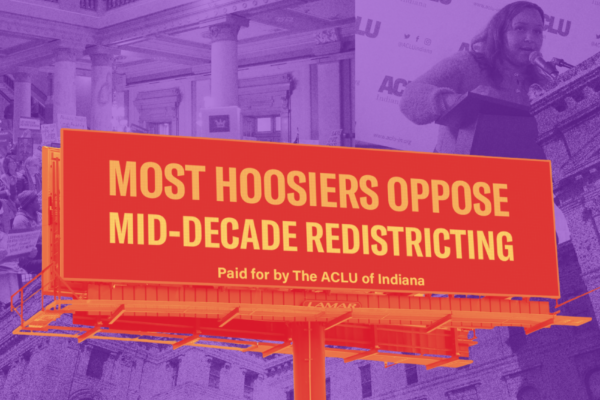
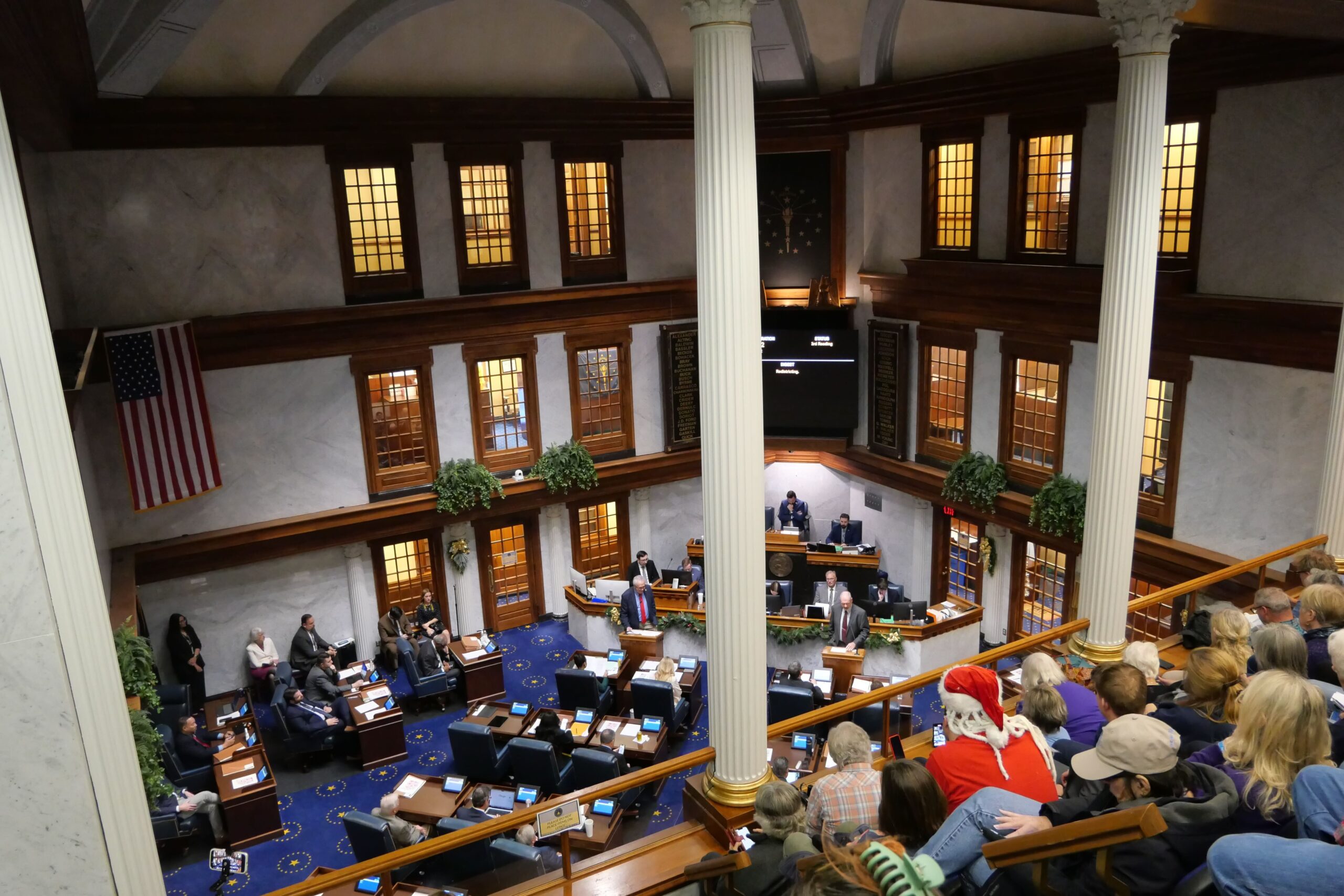
On Thursday, December 11, a packed audience filled the Senate chamber and Statehouse hall as lawmakers sat down for the final vote on House Bill (HB) 1032, a divisive redistricting proposal that drew intense public opposition. The legislature had been called in a month early – a highly unusual and unprecedented move led by Governor Braun – to answer a political call from Washington.
Indiana was not alone. Across the country, states were facing pressure to redraw congressional maps ahead of the 2026 midterms after President Trump urged Republican-led legislatures to boost and protect the GOP’s narrow House majority. Texas, Missouri, Ohio, and North Carolia adopted new maps, making Indiana’s fight about more than one bill. It was an affront to the entire democratic process, carving up communities in nonsensical ways for partisan gain, all while citing no new Census data and adding language to insulate the maps from legal challenges.
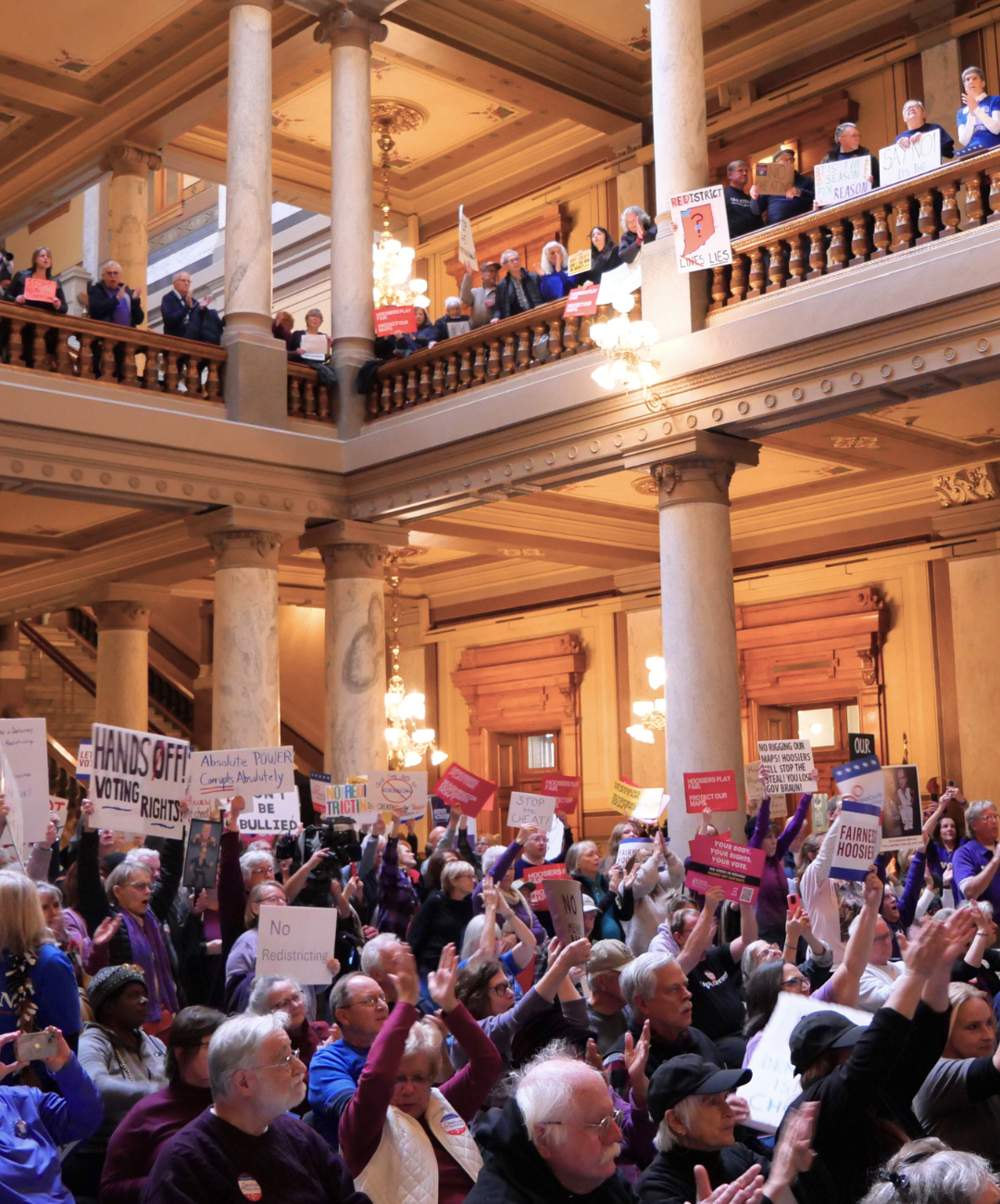
In Indiana, that effort was met with resistance stemming back to August. In December, Hoosiers sent more than 61,500 messages to lawmakers opposing redistricting, alongside extensive public testimony and visible opposition at the Statehouse. In a result that surprised the country, the bill failed 31-19, with 21 Republican state senators joining all 10 Democrats to defeat it.
“The federal government should not dictate by threat or other means what should happen in our states,” said Sen. Spencer Deery, one of the Republicans who voted no. Sen. Fady Qaddoura put it plainly: “Competition is healthy, my friends. Any political party on earth that cannot run and win based on the merits of its ideas is unworthy of governing.”
For many, this fight was also about whether their voices would be heard at all. Here are some words from constituents who opposed redistricting.
Kylie K. described what representation means when you have consistently felt politically outnumbered and silenced:
"For Hoosier Democrats, the phrase "blue dot in a red state" has been repeated for decades. Our hopes for electing Democrats to office have been dashed year after year. But that phrase has a keyword: dot. That dot represents me. It represents the Hoosiers who believe this state can do better. And it has meant that we get to have a small voice — even if it sometimes gets drowned out.
This time, our voice wasn't drowned out. Hoosiers across the state spoke out so overwhelmingly that the Indiana Senate President Pro Tempore declared there were not enough votes for redistricting.
And yet, here we are again. This discussion is happening due to cowardice and this administration's desire to please a president. Governor Braun and Republican senators need to be reminded that they work for Hoosiers — not Donald Trump.
On a more personal note: Indiana already took away my voice as a woman when the Holcomb administration stripped my right to make my own healthcare decisions. It is unconscionable that my voice as a Hoosier be taken away, too.”
Another constituent, Lorna L., brings a slightly different perspective.
I am a seventh-generation Hoosier. I cast my first vote for Ronald Reagan. I stood up for the Republican Party for years. And I am telling you: this is not the party I stood up for. We are better than this.
These perspectives highlight that opposition to redistricting was not narrow, and it wasn’t partisan either. Resistance came from all different backgrounds and experiences, but with one common idea: manipulating representation for partisan gain goes against our values as a state. In Indiana, we play fair.
Several lawmakers who publicly opposed HB 1032 were swatted during bill hearings, and the President even publicly promised to primary the eight Republicans seeking reelection in 2026. Despite this threat of retribution, Indiana halted the effort. We answered a basic question: who does the government serve: Indiana residents, or political demands from Washington.
Other Bills, Similar Trends
Other failed bills targeted different issues, but they reflected common trends taking shape across the country — and Indiana residents showed up to stop them.
Abortion medication crackdown: Hoosiers sent nearly 900 messages successfully opposing SB 236. This bill fits a broader strategy to restrict medication abortion through mailing bans, private enforcement schemes, and out-of-state targeting. Indiana’s bill largely mirrors Texas’ HB 7, with other states like South Carolina and West Virginia pursuing similar legislation.
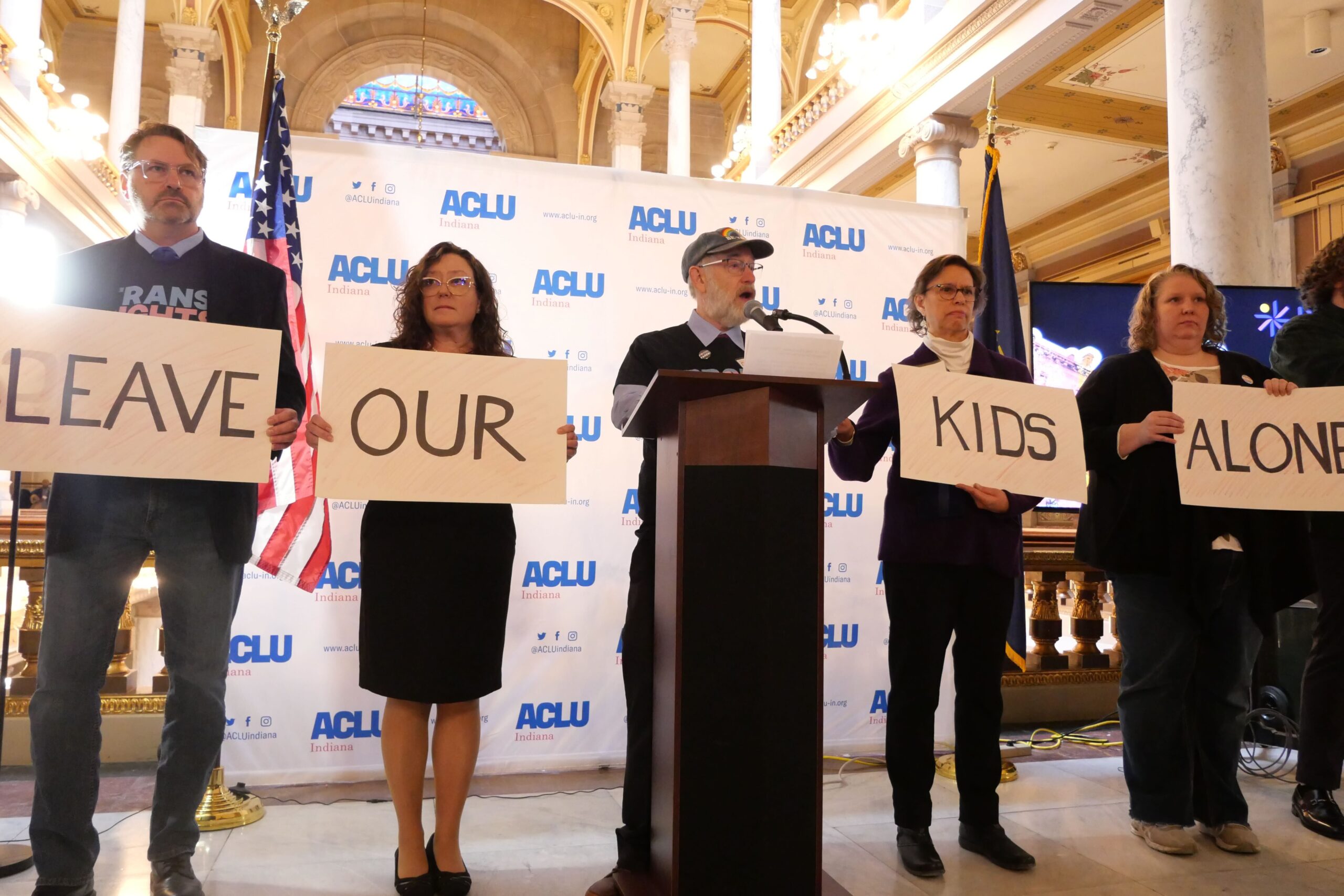
Discriminatory gender definitions and bathroom policing: The ACLU of Indiana joined advocates from across the state during LGBTQ+ Statehouse Day to oppose SB 182, a sweeping attack on transgender and nonbinary Hoosiers. The bill would have imposed rigid definitions of sex, restricted accurate identity documents, and expanded bathroom policing in schools and colleges, following a broader national playbook already seen in other states.
Expansion of the death penalty: SB 11 and HB 1119 would have expanded Indiana’s execution methods to include the firing squad and nitrogen hypoxia. That, too, followed a broader national trend: the Death Penalty Information Center reports that five states now allow firing squad executions, and five states specifically authorize nitrogen hypoxia.
Early voting rollback: Hoosiers quickly sent over 850 messages opposing HB 1359, which would have cut early voting from 28 days to 16. Like the federal SAVE America Act being debated, the bill reflected a familiar pattern: instead of expanding access to the ballot, lawmakers advanced new barriers that make voting harder for eligible people.
Public school Ten Commandments: Over 15,000 messages were sent to legislators opposing HB 1086. Indiana’s proposal mirrored a wider push to inject government-backed religion into public schools. The Associated Press reported that at least 20 states considered Ten Commandments display bills in 2025, and Arkansas, Louisiana, and Texas have become major battlegrounds on the issue.
What Comes Next
These bills failed, but the ideas behind them remain. Some are already advancing in other states, and some could return in Indiana next session.
This year still showed the importance of paying attention and speaking out, even in a moment that can feel accelerated and overwhelming. You sent messages, signed petitions, came to the Statehouse, shared your stories, and built community with one another. That made a difference. Read the full session recap with our 2026 Legislative Report & Scorecard.
How do we show up next? The same people power that helped stop some of the most harmful bills this session must carry forward into the elections ahead. Voting is one of the clearest ways we show up for each other, protect our rights, and help shape what comes next for Indiana. Early voting for Indiana’s Primary is already underway. Here is the timeline to keep in mind:
- Now - Monday, May 4: Early voting is open for the Primary.
- Tuesday, May 5: Primary Election Day – the polls are open from 6 a.m. to 6 p.m.
- Tuesday, May 19: Voter registration reopens for the General Election.
- Monday, Oct. 5: Voter registration closes.
- Tuesday, Oct. 6: Early voting begins for the General Election.
- Tuesday, Nov. 3: General Election Day – the polls are open from 6 a.m. to 6 p.m.
Learn more about how to prepare for the upcoming election here.